On This Day, 1 & 2 October
Henry III & Richard III
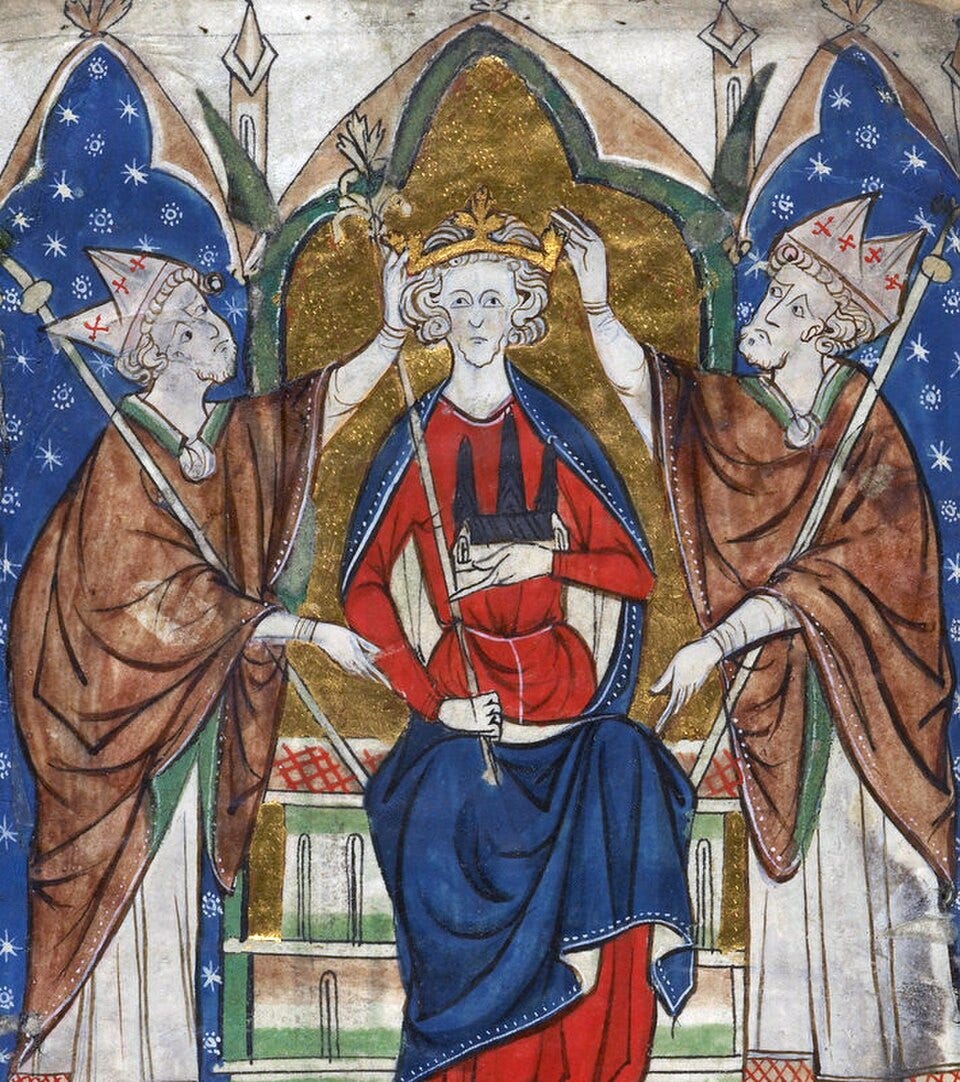
This is part II of this week’s On This Day round-up. For this second half of the week, we have two kings’ birthdays (Henry III and Richard III).
I hope you enjoy these posts! Let me know what you think in the comments section, and please subscribe if you haven’t already.
On 1 October 1207, the baby who would become Henry III was born at Winchester Castle. His father was the notorious King John (aged 40) and his mother was Isabella of Angoulême (aged about 19). Henry was the first son born to an English king since John himself, and his father named him after his grandfather, Henry II, once lord of Normandy, Anjou, Maine, Touraine, and Aquitaine. According to Dan Jones, this was a signal of John’s intentions to return his dominions to the size they were during Henry II’s reign.
Henry was to be crowned quickly at age 9; that full story will come on 28 October. Magna Carta was re-issued by Henry on 11 February 1225; that re-issue is the version that lasted. The word “Parliament” was first used in official records during his reign; Simon de Montfort’s parliament met on 20 January 1265, which laid the foundation for subsequent parliaments. Here’s the thing though: Henry was actually de Montfort’s prisoner, so that parliament wasn’t his achievement whatsoever. The first royal proclamation in English since the Conquest was made during Henry’s reign as well. Also, Henry III was the longest reigning English monarch until George III, having reigned from 1216 to 1272, 56 years.
On the darker side, during his reign was the Lincoln blood libel in 1255, in which he backed a false accusation that a group of Jews in Lincoln had murdered a Christian boy, and 18 of these Jews were hanged in London. There was also the Second Barons’ War (1264-1267). Henry had been favoring his foreign relatives, taxing the people heavily, and wasting his kingdom’s funds. The Provisions of Oxford (1258) were forced on him by the barons. He got the Pope to release him from the oath, so war broke out (like father like son…). Then he and his son (the future Edward I) were captured at Lewes. Edward escaped, and his army killed Simon de Montfort at the Battle of Evesham in 1265. The war ended in 1267.
I find the conjecture that Henry was named after his grandfather to signal re-conquest very interesting. It does make sense though, because by this point John had lost nearly all of the continental Plantagenet lands and would have been desperate to get them back. Here’s the twist: Henry later formally gave up claims to most of those lands, except Gascony, in the Treaty of Paris in 1259.
What do you think? What should Henry be remembered for: Magna Carta and parliament, or Lincoln and Lewes?
On 2 October 1452, at Fotheringhay Castle in Northamptonshire, the baby who would become Richard III was born.
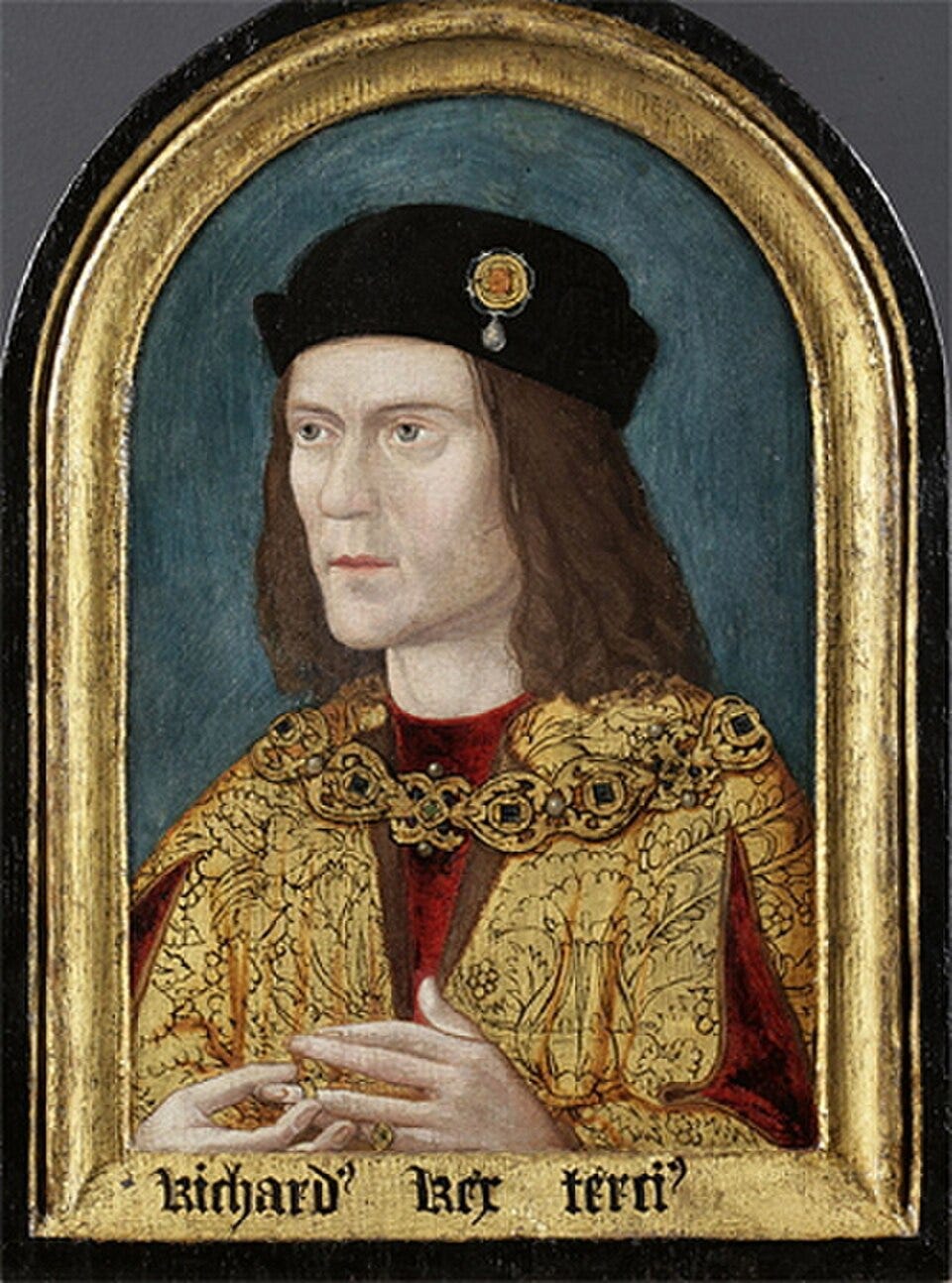
He was the eleventh of twelve children (depending on your source) of Richard, Duke of York, and his wife, Cecily Neville. He was 8 when his father died at the Battle of Wakefield (30 December 1460) during the Wars of the Roses. His mother sent him and his brother George across the channel to Burgundy for safety after the Lancastrians won the Second Battle of St Albans (17 February 1461). Later, their brother Edward won the Battle of Towton; Richard and his brother George were back in England for his coronation as Edward IV in June 1461.
Edward IV became the first Yorkist king. The brothers’ grandmother was a Mortimer, the family that (arguably) had a better claim for the crown… for more on that, see my note from earlier this week, involving the overthrow of Richard II. After becoming king, Edward made his brother Richard the Duke of Gloucester. After the death of Edward and the subsequent claim that the “Princes in the Tower” were illegitimate, Richard was made King Richard III in 1483. He was later killed at the Battle of Bosworth in 1485. He was the last Plantagenet king.
I really do wonder how it would have felt for young Richard to not only lose his father but to be rushed off to a foreign country like he was. Did he and his brother George know anyone at all? I just imagine that they must have been so frightened!
Do you think that the exile and losing his father at such a young age shaped the man Richard became?
I hope you enjoyed this week’s second round-up! Please let me know what you think in the comments!
Sources:
Henry III:
Dan Jones, The Plantagenets (2012), “Lackland Undone” and “Securing the Inheritance,” and the chapters on Henry III’s reign.
Dan Jones, Magna Carta (2014), Afterword.
Matthew Paris, Chronica Majora, the year 1255, in J.A. Giles, trans., Matthew Paris’s English History, vol. 3 (1854). Free on the Internet Archive.
Gavin Langmuir, “The Knight’s Tale of Young Hugh of Lincoln,” Speculum 47 (1972).
Richard III:
Dan Jones, The Wars of the Roses (2014).
Images:
The coronation of Henry III, from the Effigies ad Regem Angliae, c. 1280–1300. British Library, Cotton MS Vitellius A XIII, f. 6r (public domain, Wikimedia Commons).
Richard III, by an unknown artist, early 16th century. Society of Antiquaries of London (public domain, Wikimedia Commons).